The Evolution of Computer Passwords and Authentication
A look at how computing moved from shared systems and simple passwords to multi-factor and passwordless authentication.
Computers before personal accounts
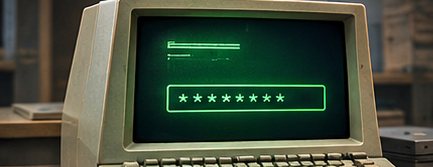
Early computing environments were often operated by specialists. Users submitted jobs, shared terminals, or worked under controlled procedures. Not every system required each person to prove an individual identity in the way modern websites do. As interactive time-sharing systems developed, identifying users became increasingly important for separating files, controlling access, and accounting for system use.
One influential early example was the Compatible Time-Sharing System at MIT, which helped demonstrate individual user accounts and password protection. Passwords were a practical way to associate a person with a session, but early systems had limited security controls and different assumptions from today's internet-connected services.
The rise of passwords
A password is a secret that a user presents to demonstrate knowledge associated with an account. Early passwords were often short and reused because systems had limited interfaces and users had few accounts. As networks and online services expanded, passwords became the default gatekeeper for email, banking, work systems, and personal information.
Password weaknesses became more visible as attackers gained access to large password databases and automated guessing tools. Common words, predictable substitutions, reused passwords, and passwords exposed in breaches created opportunities for account takeover. A password that is strong on one site can still be compromised if it is reused elsewhere.
Better password storage and policies
Secure systems should not store passwords in readable form. They store a derived value using a password-hashing function designed to make guessing expensive. Modern password storage uses unique salts and suitable password-hashing algorithms, with work factors chosen to resist large-scale guessing. This is different from ordinary fast cryptographic hashing.
Password policies have also evolved. Frequent forced changes and rigid character rules can encourage predictable behavior. Current guidance emphasizes length, screening against known-compromised passwords, rate limiting, secure recovery, and multi-factor authentication. Password managers help users create and maintain unique credentials for different services.
Paper codes and early second factors
Before smartphone authenticator applications, organizations used printed lists of one-time passwords and protected code cards. A user might be asked for the next unused numbered code from a list, or a particular code revealed from a scratch-off card. These approaches added something the user possessed, beyond a memorized password, although paper could be lost, copied, or stolen.
Hardware tokens later generated codes electronically or stored cryptographic credentials. Some displayed a changing number; others connected to a computer or were used with smart-card readers. These devices helped establish the idea that authentication could depend on a separate physical object rather than only a secret remembered by the user.
MFA and passwordless methods
Multi-factor authentication combines different factor categories, commonly something a person knows, possesses, or is. A password plus a code from an authenticator app is an example. Time-based one-time passwords use a shared secret and a time counter so the application and server can independently calculate a matching code. The code is temporary, but it can still be phished.
Passkeys use public-key cryptography and can provide phishing-resistant authentication when correctly implemented. The service stores a public key while the authenticator protects the corresponding private key. Biometrics may unlock the authenticator locally, but the biometric itself is not normally sent to the website. Passkeys change the authentication model rather than merely adding another memorized secret.
Authentication as an ongoing discipline
No single method fits every user, device, and risk. Organizations must consider account recovery, lost devices, accessibility, administrator access, shared equipment, and protection against social engineering. Authentication also depends on secure enrollment and lifecycle management: adding, replacing, suspending, and revoking credentials.
The history of authentication is a progression from basic identification toward stronger proof of identity and possession. Modern systems increasingly combine cryptography, device security, risk signals, and careful account management. Understanding that progression helps organizations choose methods that fit the sensitivity of the information they protect.
Passwords and account recovery
Account security depends on more than the initial password. Password reset links, recovery email accounts, help-desk procedures, and trusted devices can all be used to regain access. If recovery is weaker than normal sign-in, attackers may target the recovery process instead. Organizations should verify identity carefully before resetting credentials or changing authentication methods.
Users should avoid sharing passwords, verification codes, or recovery codes with anyone who contacts them unexpectedly. Legitimate support staff should not need a user to disclose a one-time code. Password managers, unique credentials, and phishing-resistant authentication reduce the burden on users while making common account-takeover techniques less effective.
Key takeaways
- Security is a combination of technology, people, policies, and ongoing maintenance.
- Choose controls that address the actual risks and test that they work as intended.
- Review access, keep systems updated, and plan for recovery before an incident occurs.
Putting security into practice
Security decisions affect websites, applications, communications, and the information organizations manage. Dyeware's Resource Center explores these subjects to help readers understand the technologies and tradeoffs involved. Where relevant, Dyeware services and products provide examples of how these principles can be applied in real-world projects.